The year 2020 was burned into my consciousness as far back as 2006 when I first set up my 2020 Visions blog.
It seemed a significant milestone in my own life and its association with ‘vision’ also made it sound like a significant milestone in the future of humanity. Indeed, the three core themes of the 2020 Expo – Opportunity, Sustainability and Mobility – sought to provide an optimistic outlook for the challenges facing global societies.
However, 2020 will now forever be associated with the start of the first, and hopefully last, pandemic of the 21st Century and has marked its significance in our world’s history for reasons doubtless not predicted by the majority of futurists.
If there was one thing that I remember from trying to anticipate and predict how the 2010s might progress, it was how many times the world had to deal with unpredictable events.
In terms of anticipation and prediction of my own future, in a post I wrote in 2009 called ’10 Hopes for the Tens’ I expressed a hope that a cure would be found for my progressive and profound deafness. I was thinking more along the lines of genetic therapy or engineering but in the 5th week of 2020 our wonderful NHS gave me a cochlear implant operation. Again, an increase in Government funding for this amazing technology and a lowering of the thresholds for qualification meant this happened 10 years earlier than I had personally anticipated.
The implant was switched on 3 weeks later and then 3 weeks after that the UK entered its first COVID-19 lockdown. I still feel immensely lucky that I had the operation when I did as the waiting list for this type of surgery is now enormous.
It took over 12 months for me to learn to hear electronically again and so the delay of Dubai 2020 Expo by a year due to the pandemic is in some ways fortuitous as I am now visiting it with my hearing abilities as good as they were 30 years ago.
Another aspect of my 2020 Visions blog and my hopes for the 2010s was the progression of my daughters to adulthood.
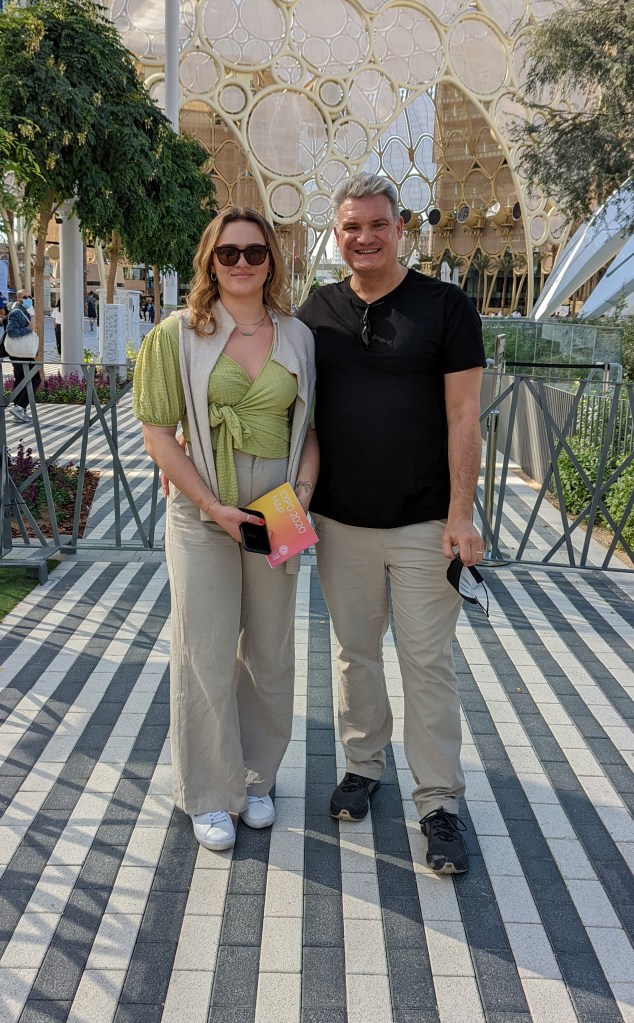
It fills me with great joy that I am visiting the Dubai Expo with my eldest daughter, Georgia. The career she has chosen following her successful completion of her Architectural Engineering and Design Management degree means she is currently working for one of the main companies responsible for designing and building the Expo 2020 site – Mace.
https://www.macegroup.com/projects/expo-2020
The Expo is vast and you barely scratch the surface of it on a one day visit so we chose to focus on what is called ‘the architectural trail’ as well as activities that you really do need to experience in person like the most spectacular display with the most underwhelming title in the whole event – the ‘Water Feature’.
We also chose to time our visit to make the most of sunset and to see the pavilions take on completely new identities as the lights come on.
( Note:- Since visiting the event I have also really enjoyed
exploring the virtual version.
Like the physical event, the digital Expo is also extremely well designed and constructed but you don’t have to fly to Dubai or pay an entrance fee to experience it –
https://virtualexpodubai.com )
These are my main highlights …
1. The Expo Metro and Station
Rightly described as the most sustainable way to travel to the event, the Dubai Metro is a lovely bit of engineering. Fully automated trains that are spotless and comfortable travel between equally spotless stations, the majority of which are raised up alongside Dubai’s 12 lane main road.
Because they don’t have drivers you can stand looking out of the front window and get the most amazing views of each cluster of high rise buildings you pass through en route to the Expo site, including Internet City, The Palm Jumeirah and Jebel Ali.
Approaching Dubai Expo on the metro you don’t get much of a sense of its scale as the area around the station is dominated by the new Dubai Exhibition Centre. You can see immediately how this area is going to evolve when the Expo finishes at the end of March this year.
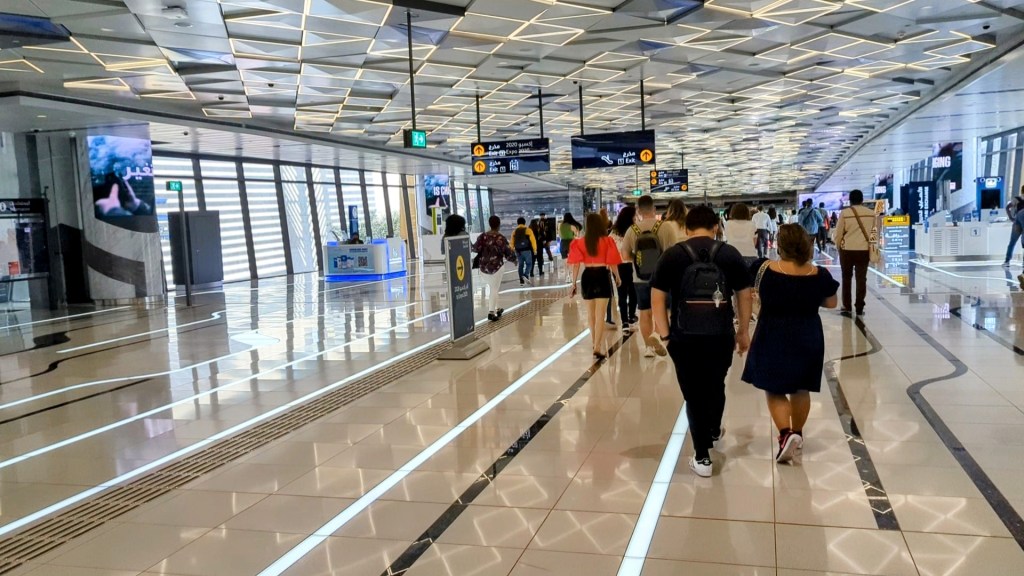
The station is built to accommodate current and future event crowds and feels very futuristic. It very much sets the tone for what awaits beyond the Expo entrance.
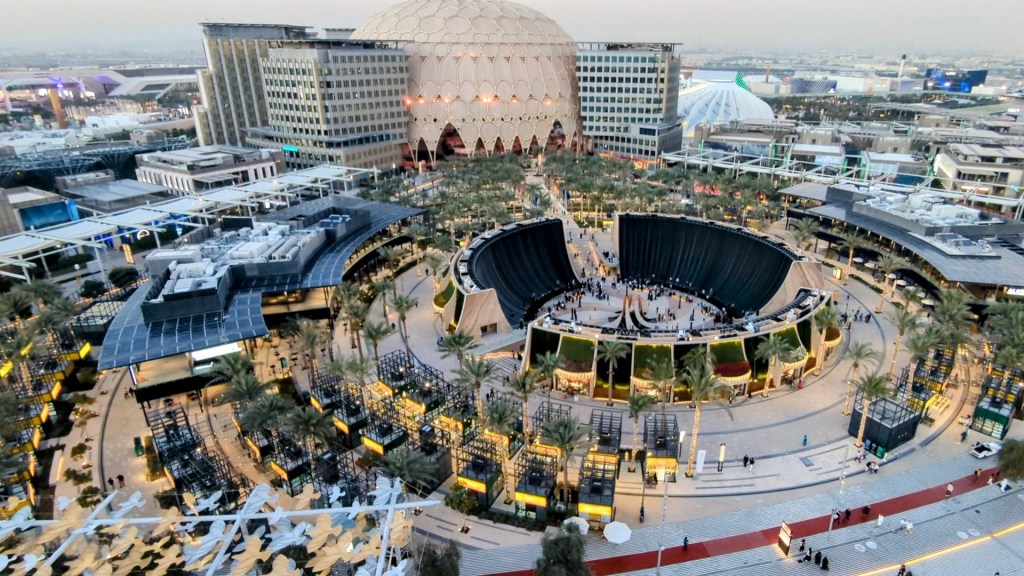
2. The Al Wasl Plaza
Al Wasl means ‘The Connection’ and refers to a historical description of Dubai as a location that connected the western and eastern world’s – a function it is very much performing in the 21st Century and especially as host for Expo 2020.
Continuing Dubai’s trend of building the world’s tallest and largest things, this plaza boosts the largest 360 degree projection system in the world.
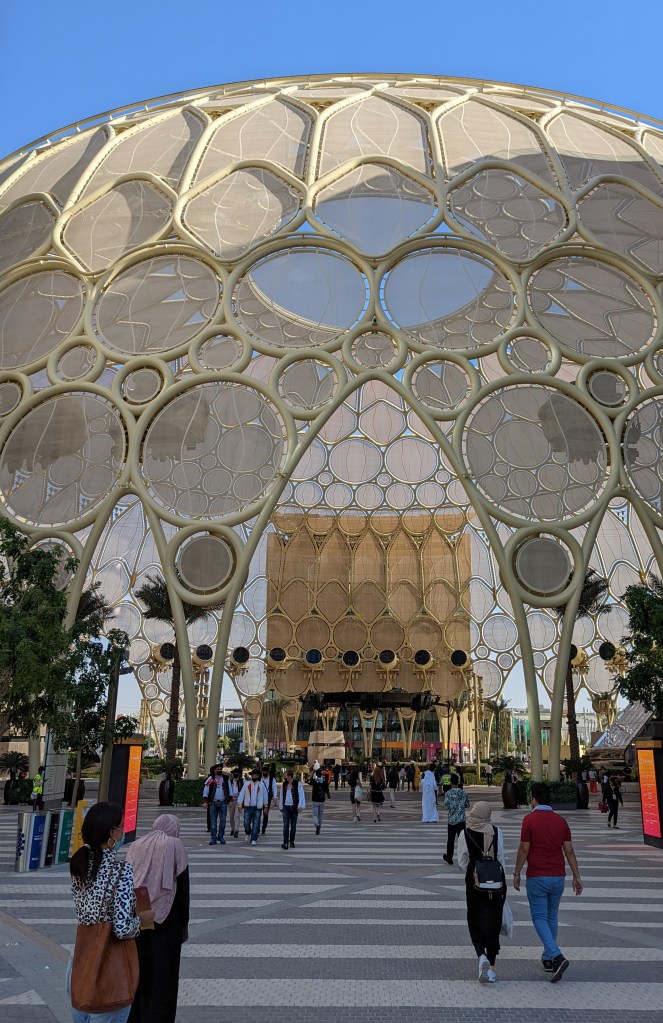
Without any projection the structure is absolutely awe inspiring – a work of Arabian art and very beautiful.
With projection it can take on many forms to support the activities happening on the central stage or to provide the entertainment itself.
It’s been commented that the Al Wasl Plaza shows are worth the entrance ticket cost alone.
3. The UAE Pavilion
It was clear that no expense was spared in designing and building the host’s pavilion and it is a stunning piece of architecture.
Falconry is central to Arabian history and culture and so it is a very appropriate theme for the UAE’s Expo representation.
The pavilion itself is designed to reflect both the shape and function of a falcon’s wings. A few times an hour the building flexes its wings and hydraulic arms transform the shape of the building.
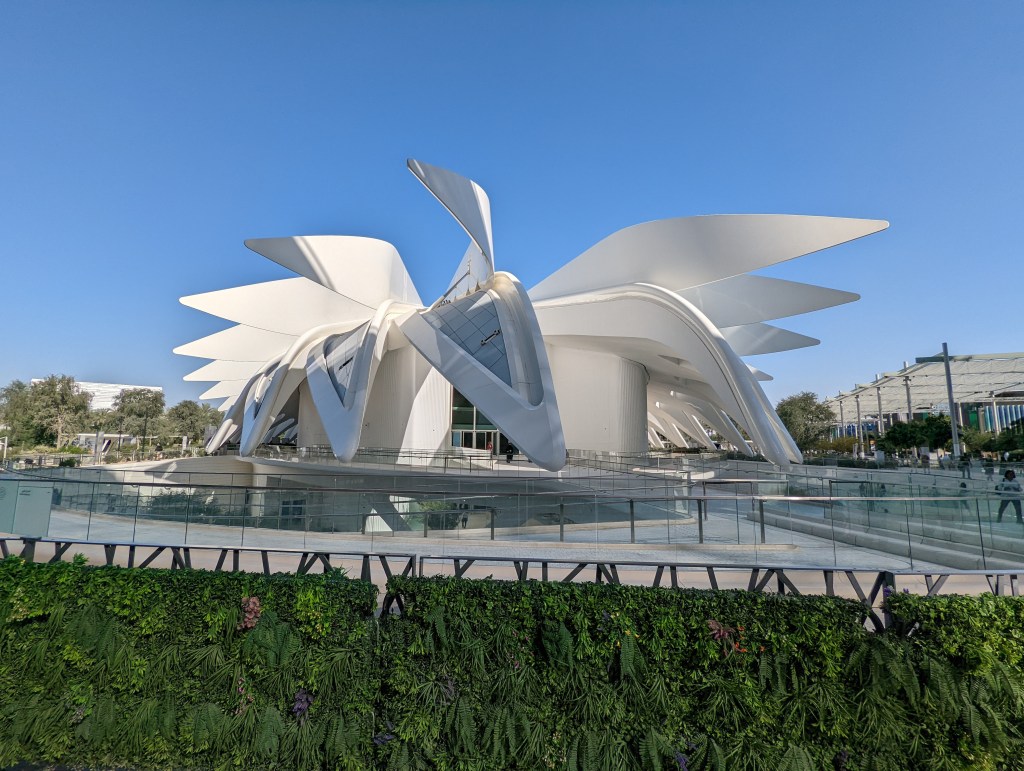
The 30 minute wait to go inside was well worth it as the internal structure was equally stunning.
You enter on a lower level and wander through sand dunes on which the early history of the UAE is projected.
You are then treated to an immersive animated version of that history before ascending to the upper atrium.
Around the outer edges of the atrium are displays explaining contributions the UAE is making to humanity’s challenges. It is an impressive summary of tangible developments and progress it is making across a broad spectrum of science and technology and certainly made me feel that is a country that clearly ‘gets it’!
However, as I observe below, the UAE has some catching up to do given its long history of fossil fuel addiction.
4. Singapore Pavilion
Singapore is renowned for being an environmentally progressive country that has worked hard to integrate the natural world into the fabric of its built environments.
This was reflected in its pavilion design with plants covering the vast majority of its structure.
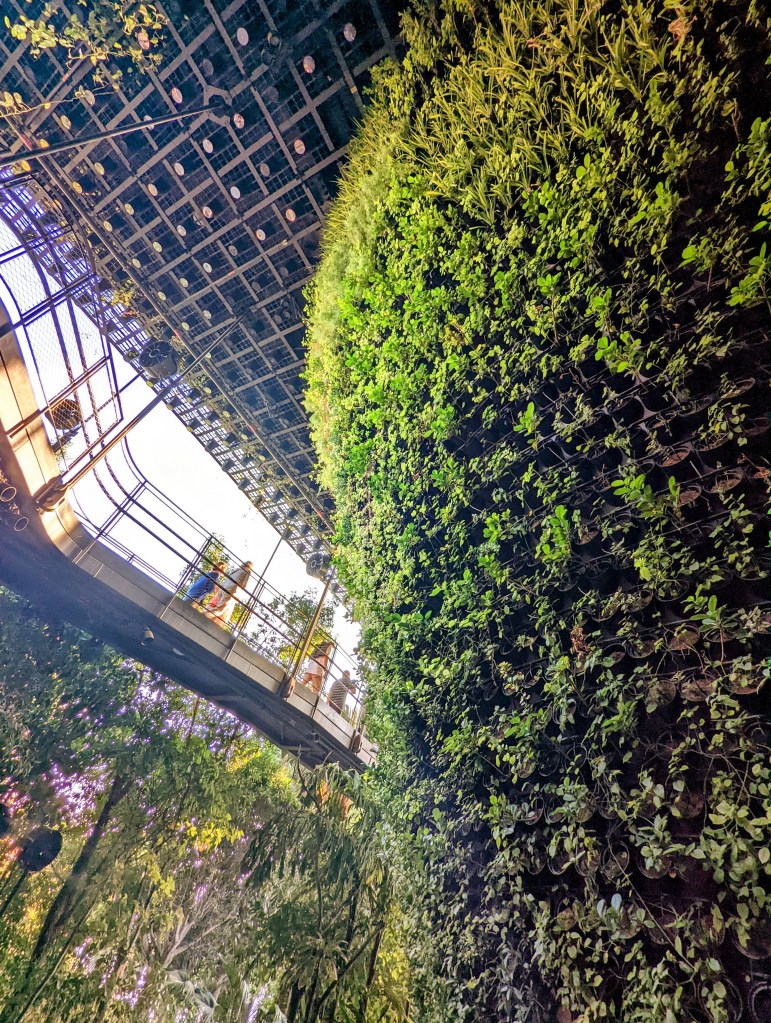
Three cone shapes, one upright and two inverted provided the display areas. On entering the upright cone at the core of the pavilion you are treated to an excellent 360 degree projected show rising up the inner walls that emphasises how we need to live in harmony with nature.
5. The Sustainability Pavilion
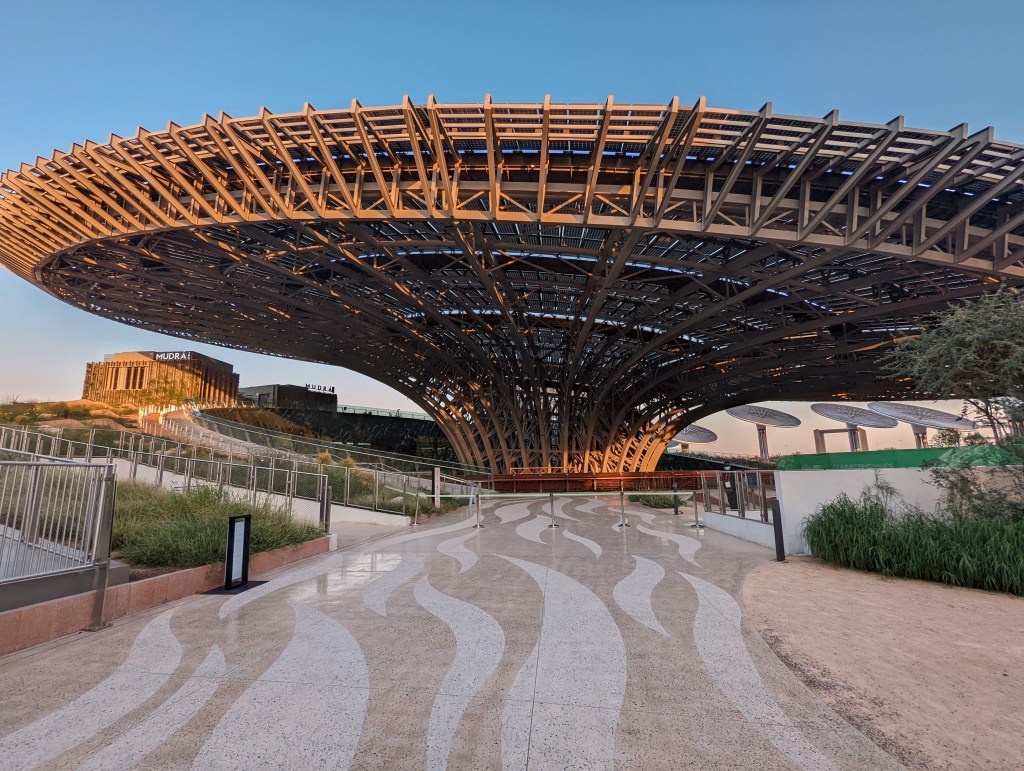
The hosts really had to deliver on the Expo sustainability theme with the related pavilion.
What they created is impressive. The area is surrounded by large solar trees and the main roof captures both sunlight and air moisture that succeeds in providing all the power and water the pavilion needs.
In fact, one of the stand out stories from the Expo concerns a Peruvian called Abel Cruz who in his childhood had to walk many miles a day to collect water for his family but then later invented ‘fog nets’ that could collect up to 400 litres a day from the air.
6. The Garden In The Sky
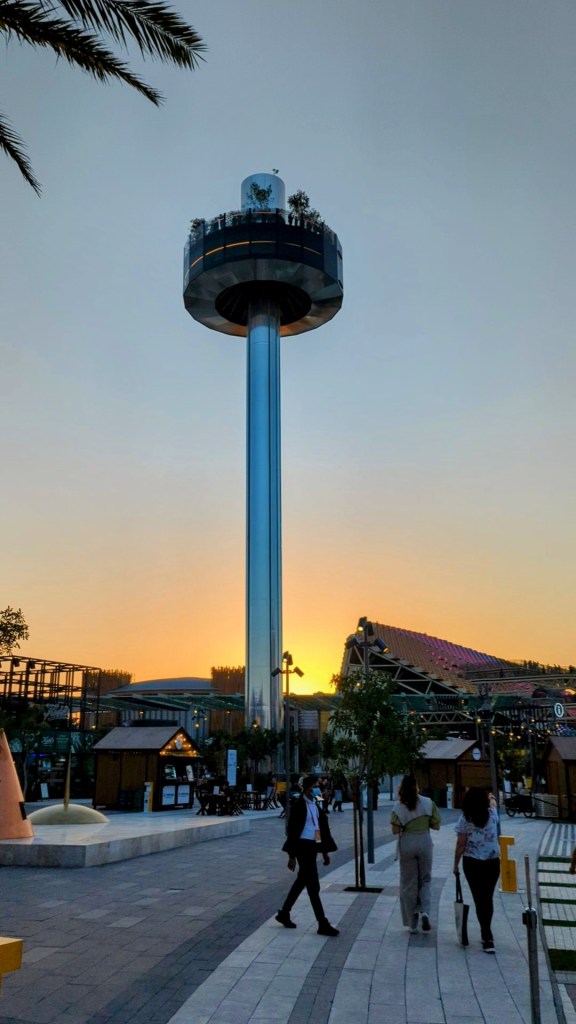
The best way to experience the scale of the Expo site is to take a trip on the revolving Garden In The Sky. The open air top deck is lined with trees and the enclosed lower deck is air conditioned.
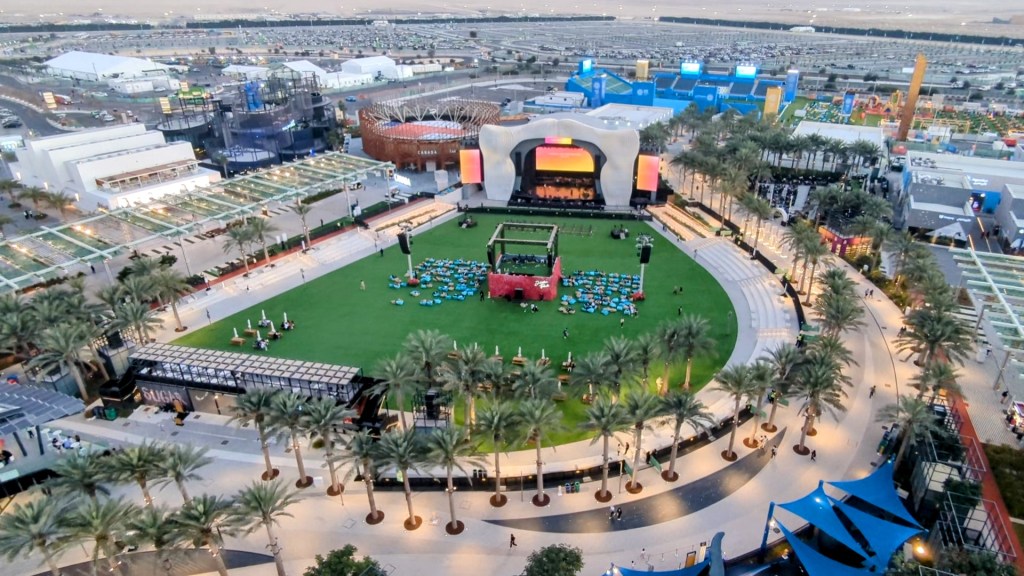
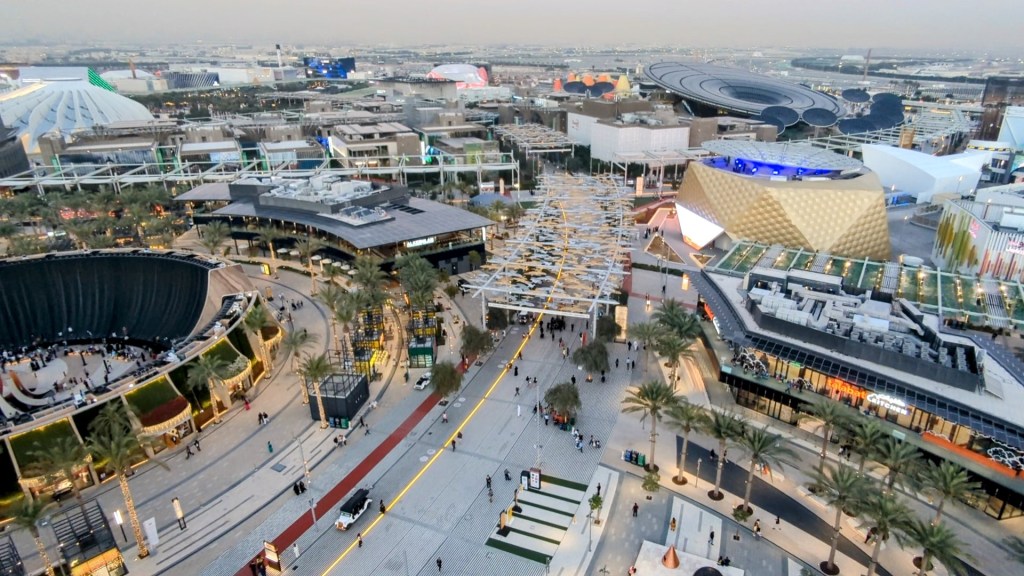
7. The Water Feature
After looking down on the Expo site from above we walked across the avenue to the ‘Water Feature’.
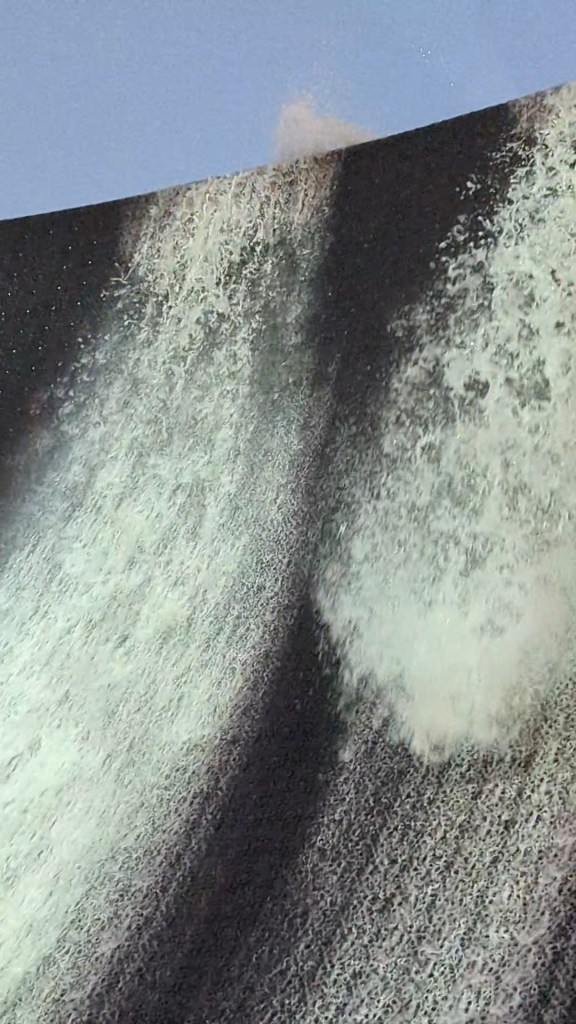
On first sight it was three large sections of black curved walls with water trickling down them. I hadn’t read or seen anything about this part of the Expo site so I was a little underwhelmed by what I was looking at.
As we stood near the central sculpture, it was suddenly lit up red and dry ice started emerging around it. The arena was then filled with music and large cascades of water started falling down the black walls.
When you look closely at the walls you can see they are made of a mesh design that causes the water to foam and bubble when it hits them.
The net result was a spectacular sight of columns of cascading and foaming water that played out patterns on the black background in time with the music.
When I think of something called a ‘water feature’ I think of a little pond or fountain.
This particular ‘water feature’ however has to be one of the most amazing things I have ever seen in my life.
8. Why? The Musical
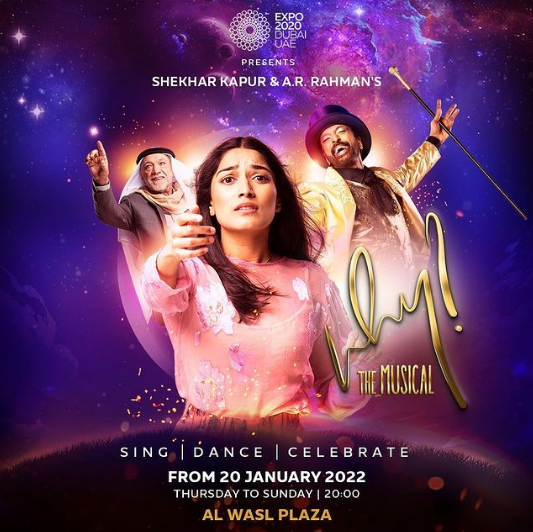
When we arrived back at the Al Wasl Plaza later in the evening we thought we were watching one of the regular evening projection shows that have been running for the last four months.
It turns out however that what we were watching was the last performance of a new 45 minute musical production that had started at the beginning of the week.
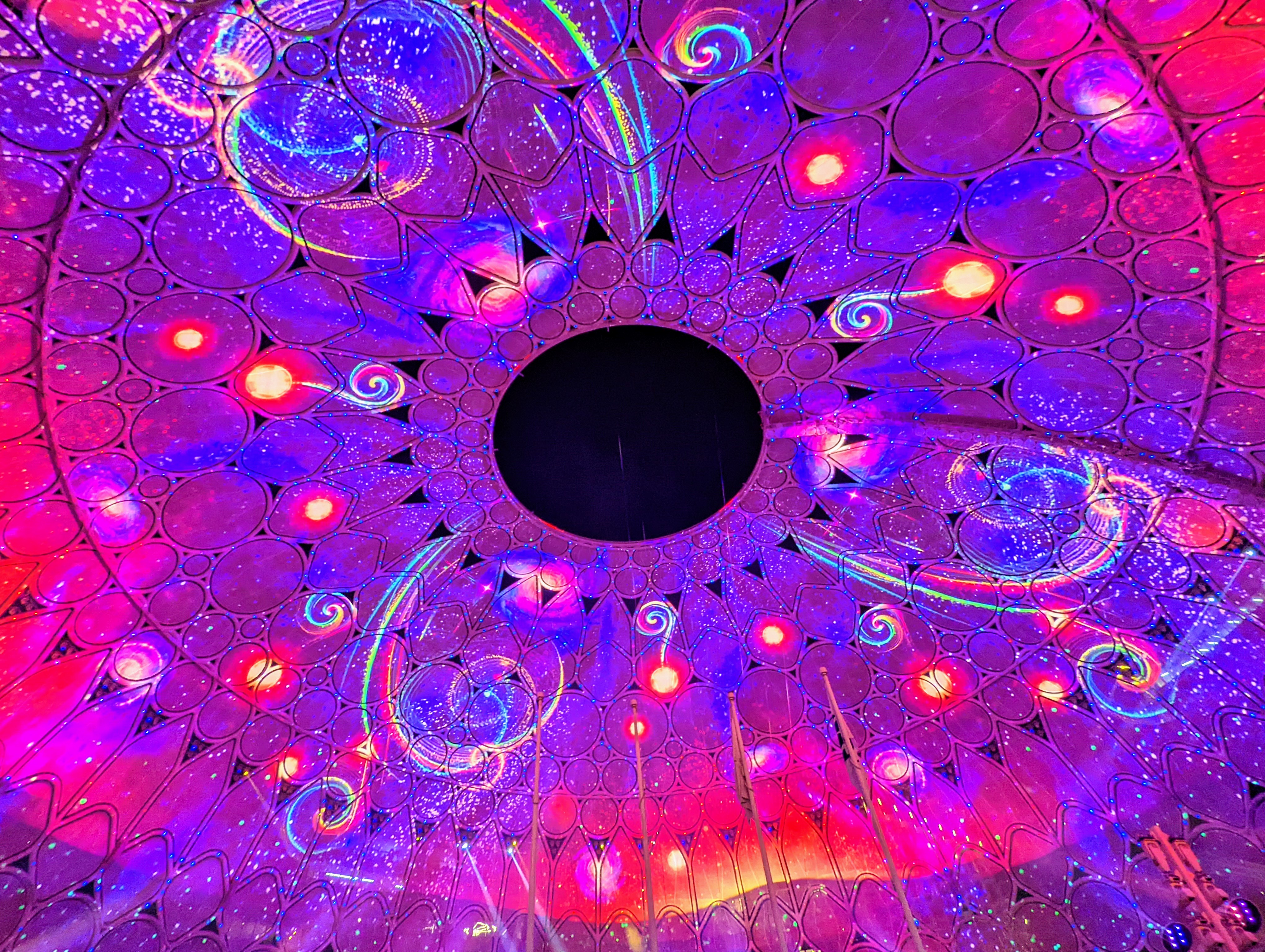
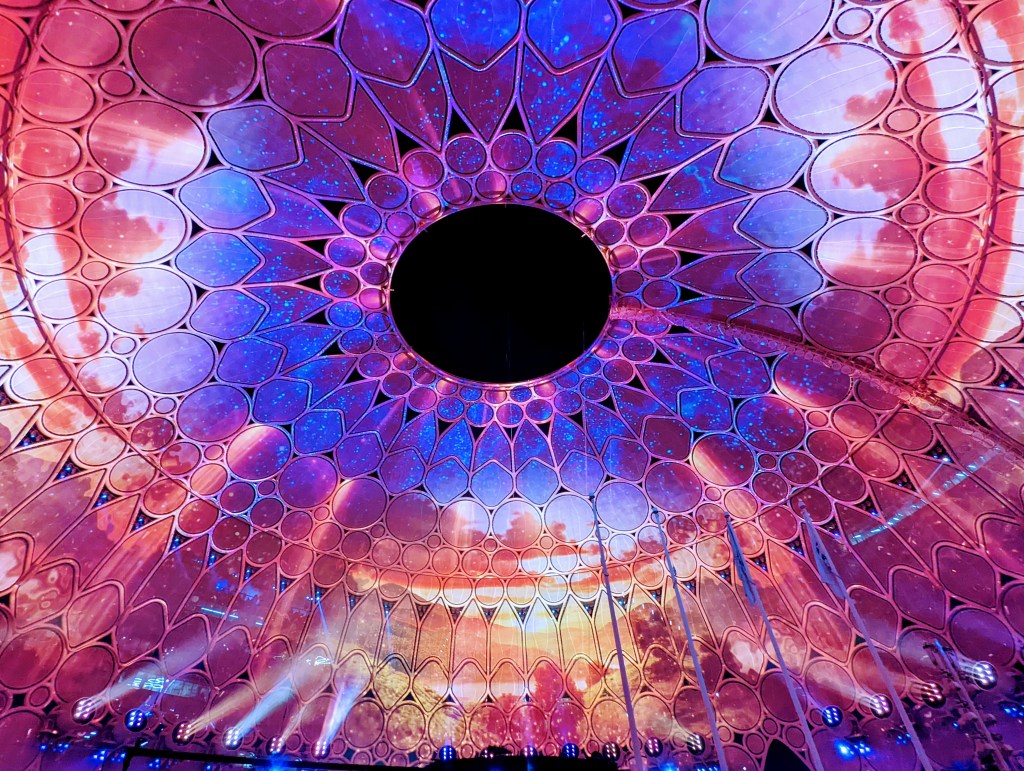
Although there were 100 performers appearing on the central plaza stage during the show, we were standing at the perimeter and so were much more focused on what was happening above us rather than down below.
What I found particularly transfixing was how the plaza dome could be used to display one massive image one minute and then hundreds of smaller images the next, sometimes each of an individual nature.
As well as the individual circles of the dome being used to great effect in the visual storytelling the supporting framework itself also took on many different forms from rings of fire to streams of water.
The whole thing was truly captivating and incredibly well produced.
And a few lowlights …
1. The UK Pavilion
I’m not the first and certainly won’t be the last British citizen to express disappointment with the UK pavilion. I believe it has been voted the worst at the event.
I still can’t decide if it was a good idea poorly executed or if the whole thing is deeply flawed.
The build quality of the place is appalling and it was looking distinctly shabby four months through the six month event duration.
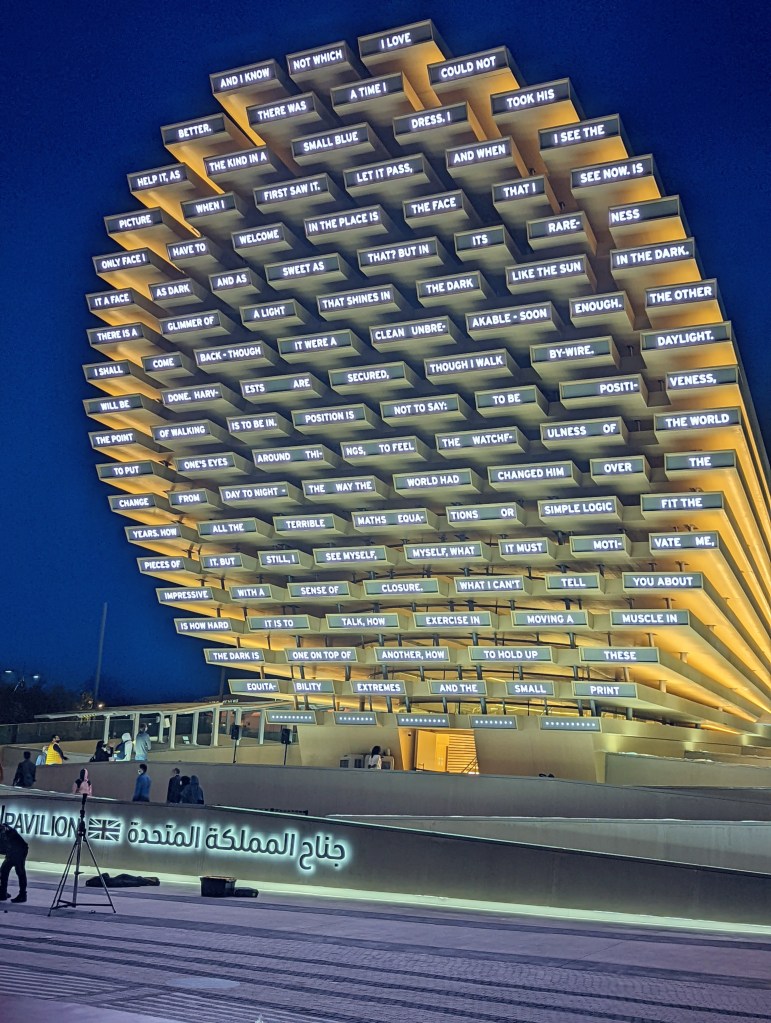
About its only saving grace is the ‘Gin Garden’ half hidden round the back of the place and that’s only because alcohol is in sparse supply across the site to respect UAE laws and culture.
2. Smoking in public places
For a futuristic city, Dubai’s public smoking policies are archaic.
The Expo site was better than other places we visited but it’s clear they weren’t fully enforcing the ‘designated areas’ policy as I walked through quite a few unpleasant clouds of cigarette smoke.
Fortunately the eating places were smoking free and that was a relief from others we visited elsewhere around Dubai where I felt I’d been transported back to 80s Britain and the smoke filled pubs and restaurants I remember from my youth.
3. ‘Dubai Cares’ … A bit
There is a general whiff of hypocrisy about the Expo 2020 themes and, to a degree, hosting it in a place like Dubai.
Whatever way you look at it, Dubai is a glistening LED enhanced monument to an era of humanity that has been destroying the planet at a horrifying rate. Turning a desert peninsular into a futuristic city has required the vast wealth generated by the fossil fuel industry and also a truly massive carbon footprint to build the record breaking structures the region has become renowned for.
Heading out to the Expo site on the metro you pass through a district called Jebel Ali.
Along the coast of this district are a line of seven power stations. Now that the world’s highest observation wheel overlooks them you can now get a sense of the scale of these electricity generation facilities from above.
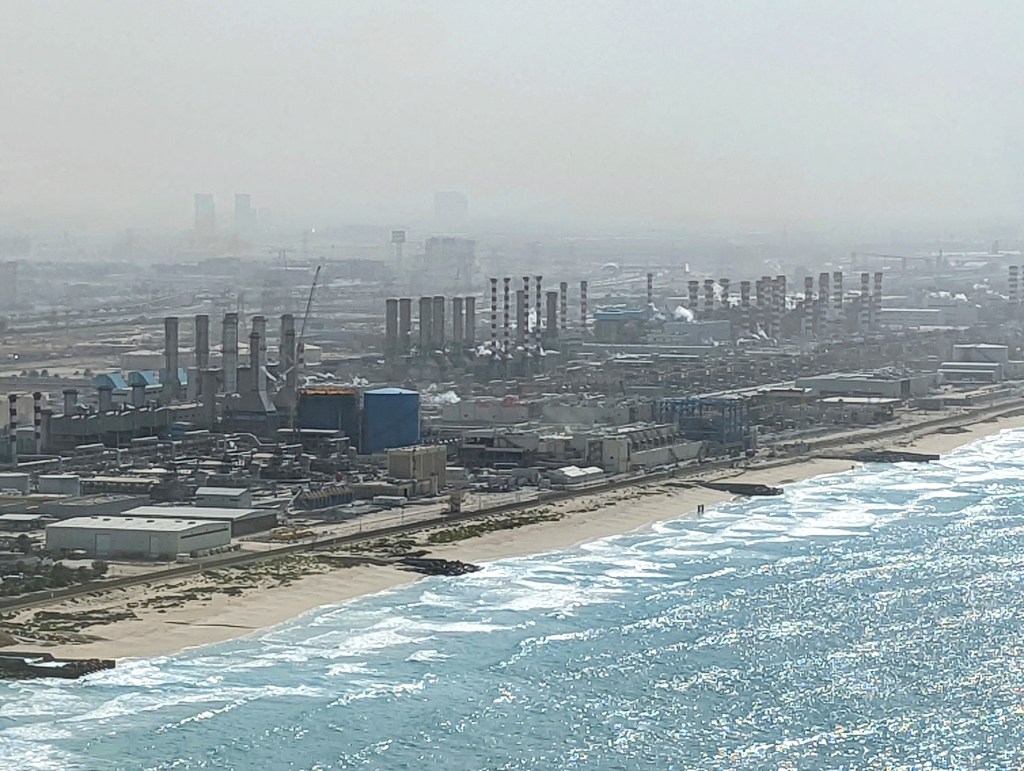
The metro line also passes under the massive pylon alley that runs from these stations to the centre of Dubai. Each pylon must carry around 30 high voltage lines and there are four rows of them side by side.
The seven power stations along this coastline are primarily gas turbine driven and it’s very hard to see Dubai and the wider UAE weening itself this fossil fuel guzzling habit any time soon.
As I am writing this 31 floors above the 12 lane superhighway that runs south from the city, there is a constant hum from the traffic below. Whatever time I have looked out of the windows there has been a continual flow of vehicles in both directions.
As you travel this superhighway from the city it is lined for miles either side by car sales showrooms. Every car brand in the world appears to be represented alongside this stretch of road and as well as the main dealer showrooms there are big sales outlets with titles like Exotic Cars, Class Motors, Royal Black Luxury Automotives and VIP Motors.
This place loves cars – and very few of them are electric. Yes, you see some Teslas but they look much more like high-end statement vehicles than any serious push to de-carbonise personal transport. I saw no electric car charging points at any of the places we visited over the 10 days we were there.
The other thing I didn’t see many of, other than on the Expo site, was solar panels. I know that Dubai has built a massive solar energy facility somewhere in the desert but it seems a major wasted opportunity not to smother the buildings here in solar panels.
Look down on the buildings from above you will see that most available roof space is covered in air conditioning units. This is at a time when the world is moving to a position where more energy will be used to cool us down than heat us up. In neighbouring Saudi Arabia for example more than half of its peak summer power consumption – generated by burning 1 billion barrels of oil a year – goes on air conditioning.
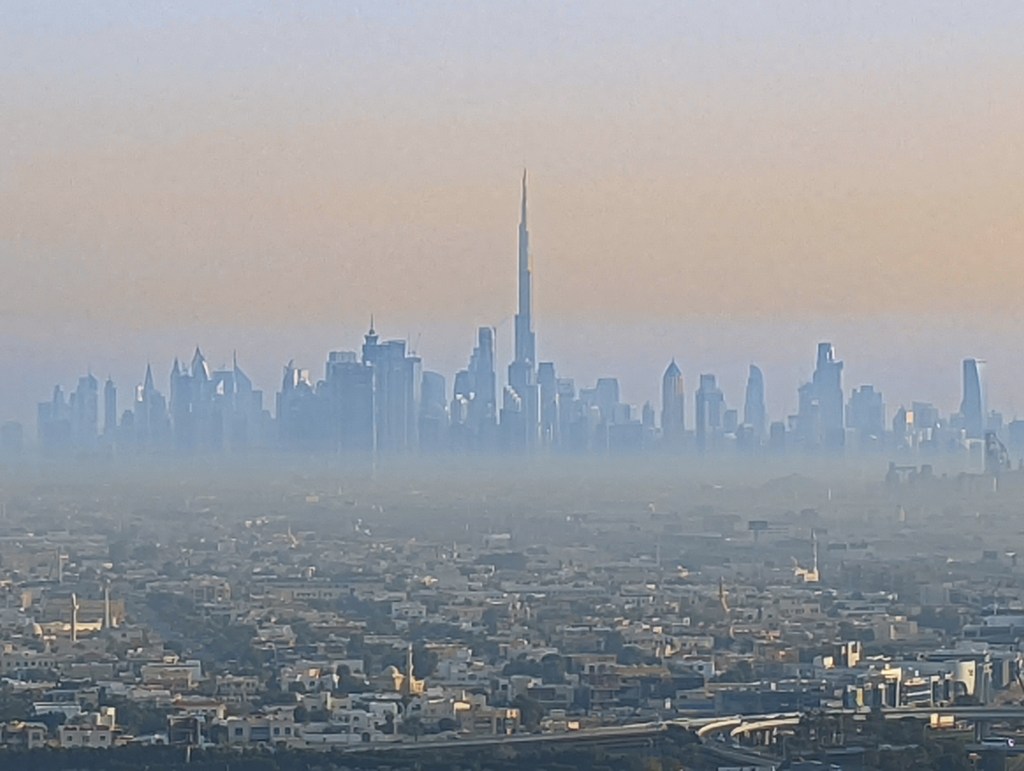
During our visit here the BBC published an article on its new Future Planet website which featured the challenges Dubai has in transforming its desert surroundings into somewhere that is liveable and desirable.
https://www.bbc.com/future/article/20220125-how-dubai-is-pushing-back-its-encroaching-deserts
The article makes reference to the government’s million tree initiative from a few years ago and the fact that every single one of those trees died.
I’m sure the pandemic lockdowns have made life quite miserable at times for the larger majority of the population who live in high rise accommodation – both the shimmering skyscrapers and the more modest looking blocks. That is reinforced by the amount of development that is happening in what is called ‘green’ living and also the massive billboards advertising this alongside the superhighway.