
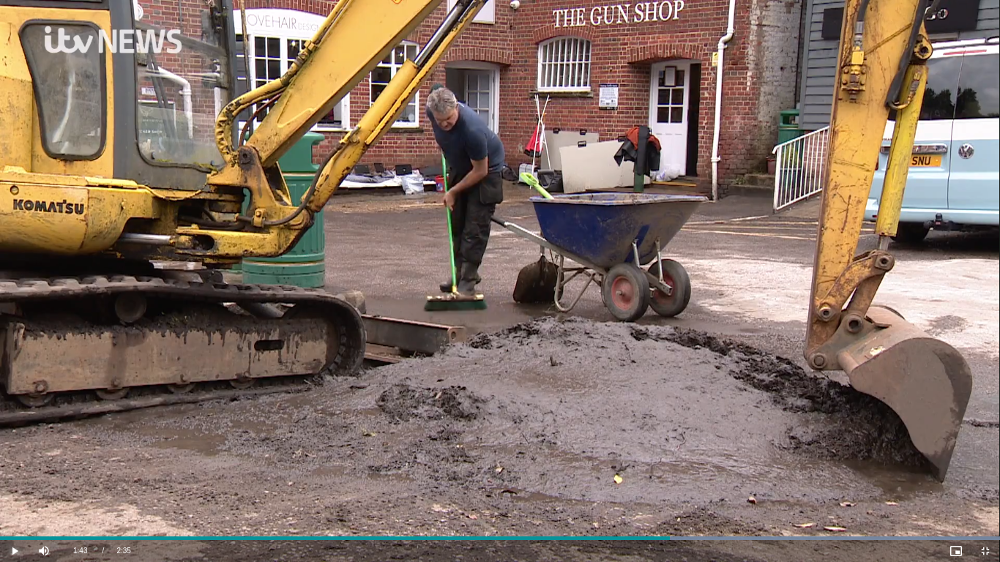
Never did I imagine when starting my semi-retirement job as part-time caretaker at Botley Mills this week that I would be on ITV News on my second morning.
I also never imagined that my 15 seconds of TV fame would feature me clad in work clothes sweeping up sewage infested sludge.
How fast life can change !
I’m sure the good people of Germany never imagined their peaceful, picturesque Westphalian villages being swept away by flood waters and a lot of their friends and relatives being killed during these last few days of a summer month.
At least nobody died at the mill – but it was literally just a few inches away from being a much bigger disaster.
The old mill in Botley was mentioned in the Doomsday Book in 1086 and this is the 100th anniversary of its ownership by the Appleby family – the oldest of whom, Jonathan, is 75 and he and his two sons have lived and/or worked at the mill all of their lives.
I spoke to each of them on separate occasions in the aftermath of Monday evening’s major flooding event and they all confirmed this was worst flood any of them had experienced.
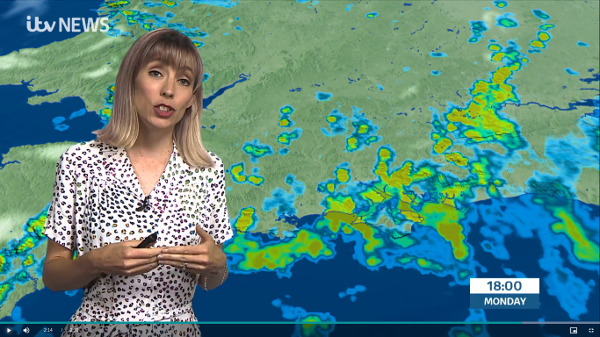
There are differing views on what contributed to the vast volume of water that swept through the mill earlier this week. The extreme weather event is clearly the main culprit with a massive amount of rainfall being dumped across the Hedge End, Durley and Botley area in a very short timescale.
Between 5-6pm I was driving along Durley Street and it was literally like driving up a river. My daughter filmed us going through the worst affected area near the garage – which also featured in the news footage the following day.
The mill owners also believe that the rapid increase in housing and road developments around the area has contributed significantly to the water volumes that they witnessed when the second wave of flooding hit the mill around 10 pm Monday night.
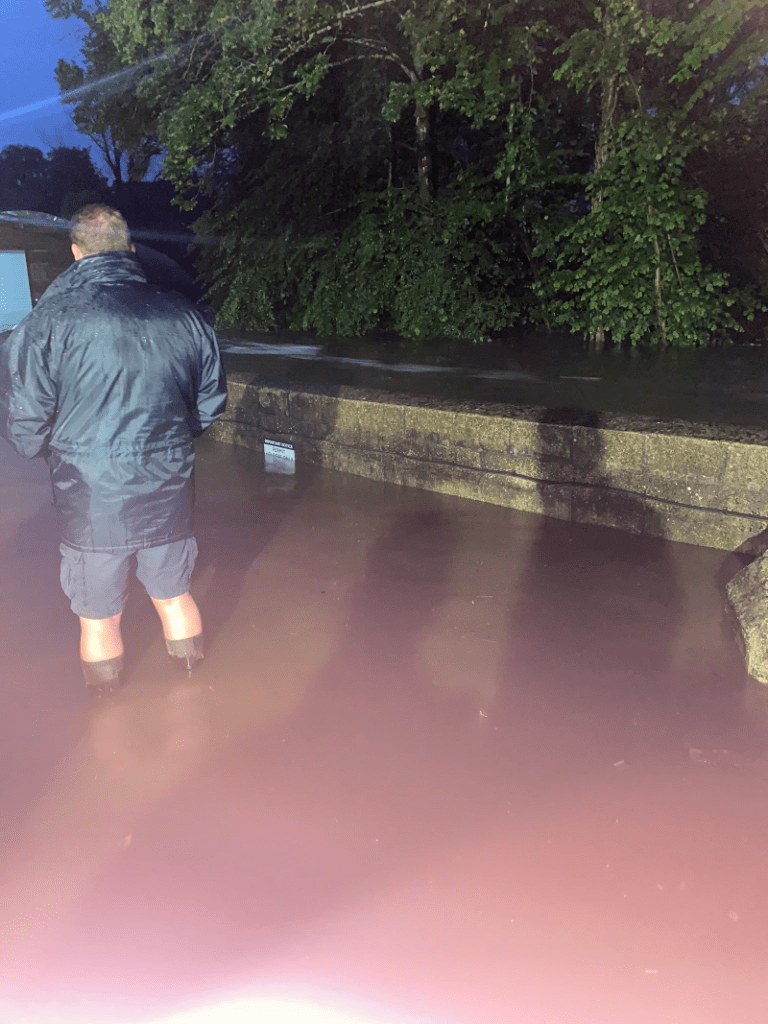
Anyone familiar with the mill will find the image taken at the peak of the flood truly shocking and, quite frankly, rather frightening.
The river level is literally just a few inches away from the top of the side wall. That is around 3 metres above the typical normal level.
Having lived in this area most of my adult life I very much agree with the owners that the levels of housing and infrastructure development further up river have contributed to increased water volumes in the water courses that feed the main river.
The developers are supposed to factor in environmental impact of surface water into the schemes. However, even casual observation reveals that the retention efforts are nowhere near as effective as the natural and original land was at preventing fast run-off of surface water.
All the developers care about is getting the water off their patch as fast as possible.
So what does all this mean for ancient buildings like the mill that sit alongside the main river systems?
Or indeed for people like ‘old Jim the caretaker’ who has to clear up the mess the floodwaters leave behind?
Personally I really feel for the small business owners who have made the mill their home over the last decade or so.
Take the Considerate Carnivore for instance. This ethical butcher operation opened at the mill in March this year. It now faces losses of over £10,000 as all its stock had to be destroyed following the ingress of flood water and most of its refrigeration units have been written off.
As this article from the Daily Echo explains, there is no insurance cover for this ‘Act of God’ – perhaps the most ironic phrase in the insurance company lexicon these days as it becomes more and more apparent that we humans are pretty much solely responsible for this rapidly increasing mess!
 Beyond 2020 Visions ...