
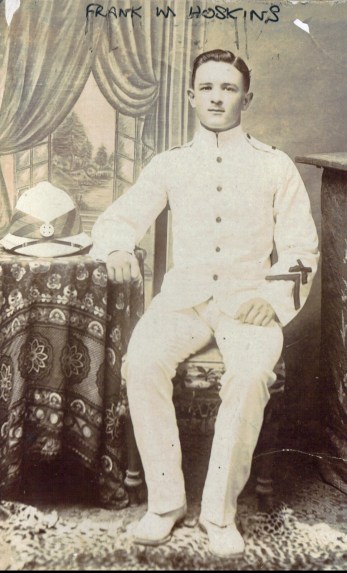
 I never met my paternal grandfather, Frank William Hoskins, but his story is one of the biggest inspirations in my life.
He died aged 67 in 1961 after suffering a stroke and contracting pneumonia a few years before I was born.
He enlisted in the Rifle Brigade in 1911 at the age of 18 and was on active service in Africa and India prior to the outbreak of the First World War. In 1914 he was sent with the British Expeditionary Force to France and survived being posted for a year on the Western Front, including having to deal with the first use of poison gas and flamethrowers on the battlefields during the Second Battle of Ypres. In late 1915 he was sent to Salonika to fight on the Macedonian Front for the remainder of the war. He was discharged from the Southern Command malaria concentration centre in spring 1919 – marking the end of his military career.
Having contracted malaria twice during his time on the Macedonian Front I have no doubt that this contributed to his early death as it is well documented these days that the disease can lay dormant and recur for many years after early infections. Added to which were the after effects of the only known drug treatment for malaria at that time – quinine – a hateful substance that caused tinnitus, giddiness, blurred vision, nausea, tremors and depression.
So despite surviving at the vanguard of many battles as a sharpshooter, scout and skirmisher, the psychological and physical legacy of the ‘Great War’ stretched beyond those early 20th Century years to finally claim him as a victim later in life. Continue reading


 Beyond 2020 Visions ...