
I was first introduced to the Drupal web platform back in 2009 by a developer friend who I had worked with closely during the development and marketing of a successful proprietary content management system called Immediacy.
That system was based on Microsoft’s .Net platform and was sold to the UK’s biggest CMS development company at one time – Mediasurface – which in turn was sold to Alterian and then SDL Tridion (which I’ve just noticed has now also been ‘acquired’ recently).
That in itself illustrates the fate of most proprietary software systems – an endless tale of acquisition which is usually about ‘buying’ customers and partner relationships to scale rapidly and improve profitability rather than anything to do with improving the technology itself.
In that respect, the relative stability of the Drupal framework and community since its inception in 2001 is a massive achievement. Those 20 years have seen phenomenal development and disruption in the way information is communicated and used – so any organisation that has succeeded in keeping pace and charting a course for the future should be applauded, particularly as many in the Drupal community volunteer their time and efforts.
The other massive achievement is that it is still entirely ‘open source’ and 100% free to use. That means that essentially all the capabilities of an extremely broad and capable web application framework are at your disposal for absolutely no license costs at all. By way of an example, when Drupal was first launched at the start of this century I was working on an ‘enterprise content management’ project for the one time largest telecoms company in the world and it had a $25 million price tag for the software licensing alone. Today I could easily replicate the scale and functionality of that project for zero dollars of license cost.
Other notable ‘open source’ platforms such as WordPress have become very messy ecosystems of free and commercially influenced developments that have created very ‘hit or miss’ environments that waste time and money and are often fraught with security risks. I have run this blog on WordPress since 2006 and it is still a great platform for ‘blogging’ but falls seriously short in many web application scenarios beyond that.
Others, such as one time ‘open source’ eCommerce platform success Magento, have sold out completely to the software behemoths like Adobe.
Alternatively, choice and flexibility is generally being whittled away by monolithic platforms like Shopify – on the face of it, simplicity and reliability of a cloud provider takes away some of the pain of running an eCommerce operation but there are inherent risks in putting all your eggs in one homogenised basket. That has become very apparent recently when a bunch of big cloud companies, including Shopify, got hit by a massive web outage.
What that incident illustrated was the worrying degree of vulnerability in systems that give you the impression that they are ‘too big to fail’. That, coupled with new upsurges in cyber attack and ransomeware heists means anyone dealing with online payments needs to be acutely aware of potential threats to their customers and business security. The other thing that has made me extremely cautious about the likes of Shopify is the typically awful reviews they receive for customer service! One thing is almost guaranteed when running an eCommerce operation – stuff will go wrong …
The other major thing I learned when working for proprietary software developers is that the ‘profit imperative’ undermines the creation of a sustainable forward looking environment as the focus always seems to shift to ‘features’ that sell software and not on the pain points that the users themselves experience. The result tends to be a growing cycle of fudges and workarounds that avoid the ‘elephant in the room’ – which is often that the underlying architecture of the software solution is no longer fit for purpose and needs to be fundamentally rewritten.
In a 20 year lifespan, the majority of software solutions are going to encounter this challenge at least once and, more likely, several times if they want to remain useful and relevant.
Drupal faced this scenario in shifting from version 7 to version 8.
Drupal 7 was an excellent solution for many web scenarios – in fact, almost 10 years to the day, I wrote a post on this site explaining why I believed this was the case, based on a range of experiences at that time .
In a post a couple of years on I explained how Drupal 7 had come on in leaps and bounds as a solution beyond its original core content management purpose – namely the burgeoning world of eCommerce .
Even though it looked like ‘content management’ had been reinvented many times over with the likes of Drupal reaching their 7th major iteration, new approaches were still appearing regularly, as I observed in this post back in 2013.
However, despite the success and massive growth of Drupal 7, the community was already looking to the future and the future it was seeing would make the Drupal architecture of that time increasingly redundant without some fundamental changes.
With the likes of Facebook pushing social graph frameworks into ascendancy, as well as pumping massive development resources into interactive JavaScript libraries like React and the likes of Apple and other device developers changing the literal landscape of screens on a seemingly daily basis, the whole way we were consuming and delivering information was shifting rapidly.
Enter Drupal 8 … a fundamental rewriting of the underlying architecture to help maintain and increase the platform’s relevance for the very different years to come.
There were massive risks and challenges in taking this approach, not least the regularly observed comment that managing an open source software community is like trying to ‘herd cats’.
However, having been through the pain of migration and kept faith that the community would come good on elements that are not in the Drupal core – eCommerce being one of the bigger chunks – I would say this is now being repaid in a platform that is once again becoming a joy to work with.
Those sentiments, and the reasoning for them, is better expressed in this post from a year ago .
The tangible result of the latest Drupal developments can be seen in a range of projects I have been doing over the last twelve months.
1. Gin-Bluff
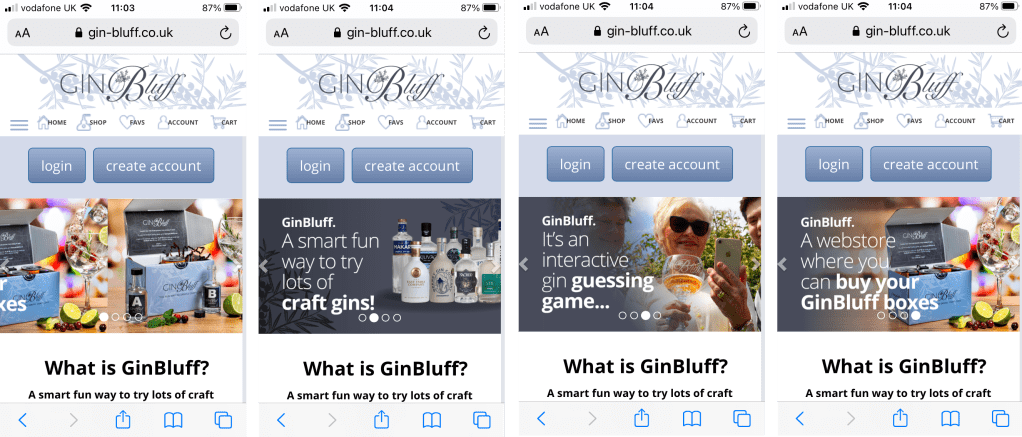
As the screenshots above suggest, the Gin-Bluff development is a mobile phone focused ‘progressive web application’ that incorporates digital marketing, eCommerce and interactive game elements.
It is built in Drupal 8 and incorporates Drupal Commerce 2.0 and the Drupal Quiz module to provide the interactive game and web store functionality.
The bulk of the development was done during the first pandemic lockdown in early 2020 and it is a good example of how the various capabilities of the Drupal ecosystem can be brought together to provide a seamless experience for both end users and content managers.
2. Perfect Party Playlist

Perfect Party Playlist is the customer facing element of a bigger project called DJ Teams and has been designed to use the Spotify Developer API to import, manipulate and export song data into a Drupal 8 orientated content management environment.
3. DJ Teams
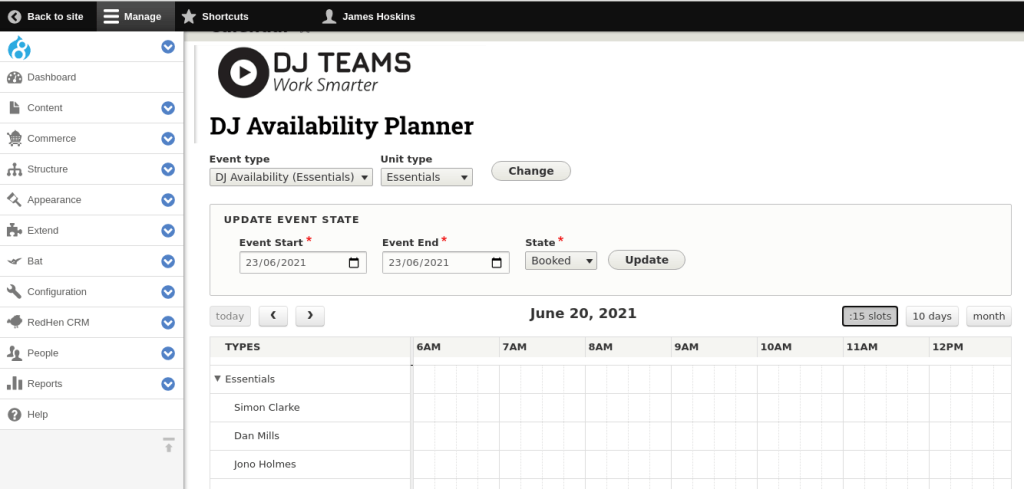
DJ Teams utilises Drupal’s native Booking and Availability Tools (affectionately known as BAT) and native CRM functionality called RedHen.
It is a demonstration of just how far the Drupal 8 ‘entity’ orientated architecture can be extended into much broader functionality than classic content entities of basic text and images.
4. Garden Designs Online

This ‘mobile first’ site makes good use of Drupal 8 media entities and provides the ability for users to upload information relating to the spaces they want designed.
Going forward it will provide the facility for customers to download the designs that have been created for them.
There is also a strong digital marketing focus that ultimately will allow the company to cross sell other garden related product and services.

5. The Bump Company
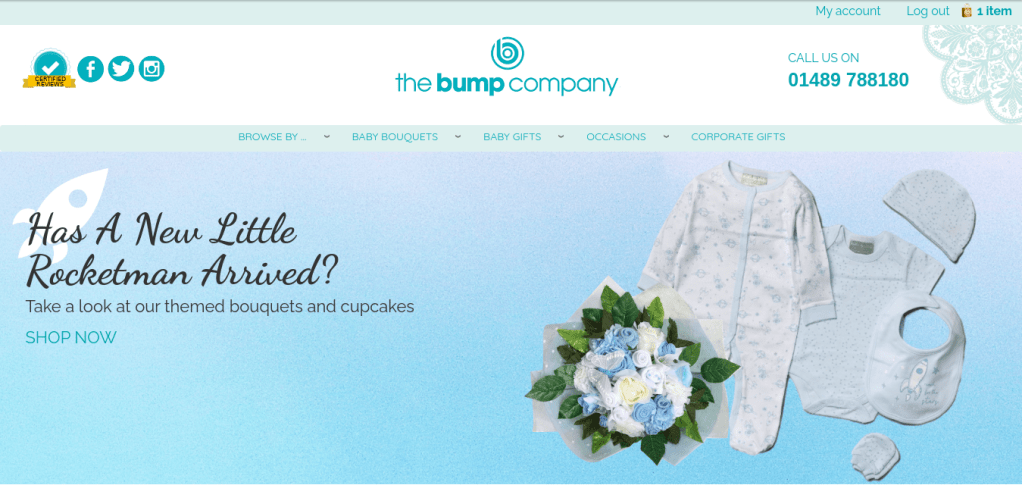

Last but by no means least is The Bump Company, a long standing Drupal development that is probably best described as a ‘labour of love’ – all puns intended 🙂
It’s probably more accurate to say it has been a love/hate relationship over the last few years as I have wrestled this site from its original Drupal 7 incarnation to the current Drupal 8/9 version.
In principle, migrating from a Drupal 7 site to a Drupal 8 site should be as simple as using the following command …
drush migrate-upgrade \
–legacy-db-url=mysql:
//user:pass@localhost/db_to_migrate \
–legacy-root=http://mystore.com
With all the additional learning I now have I can say “it could be that simple” and there might very well be Drupal 7 sites today that I could migrate to Drupal 8 in a matter of days.
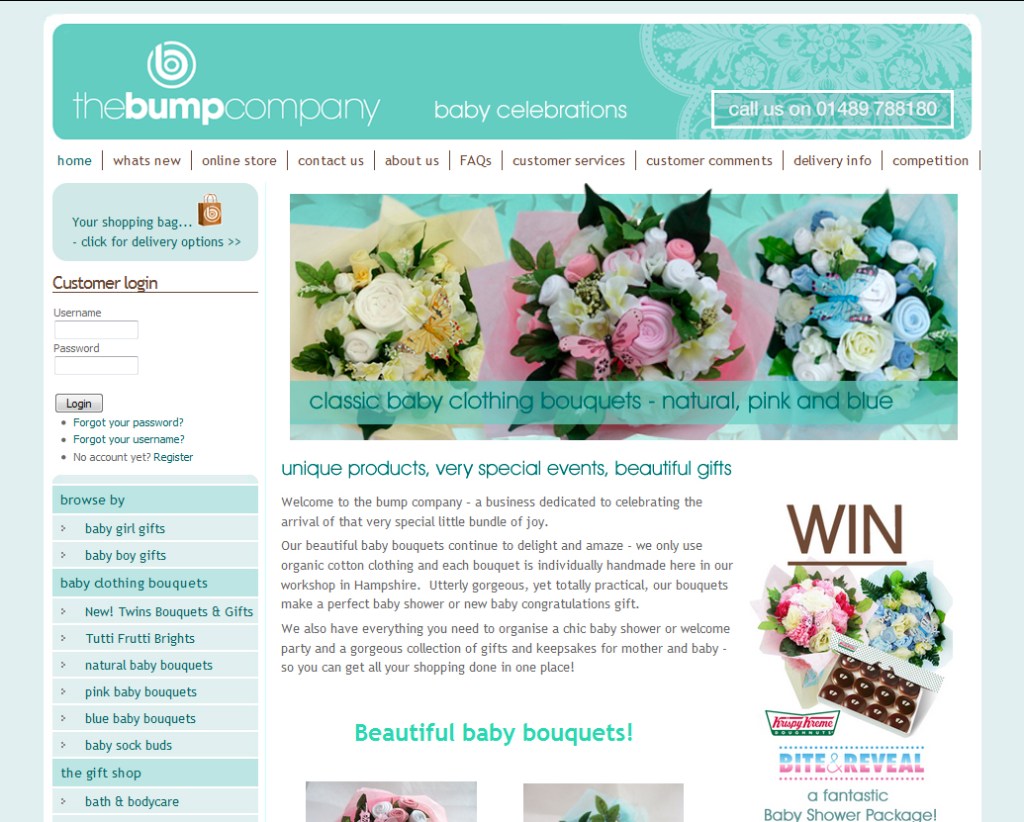
However, it has been quite a learning curve, not least because all major chunks of Drupal 8 add-on functionality, particularly eCommerce, have had to be pretty much entirely rewritten.
Back in 2009 when The Bump Company was first launched, the mobile web was still in its infancy and that was reflected very much in the early ‘desktop’ orientated design (see screenshot across)
When the company outgrew its Joomla based site and migrated to Drupal 7 in 2013 the primary focus was still essentially ‘desktop’, even though the site was built on a ‘mobile first’ template and theme. Although it complied with Google’s mobile viewport definition it was still a long way from being truly mobile responsive.
Today, websites need to ‘respond’ to high definition retina displays at one end and low end mobile displays at the other.
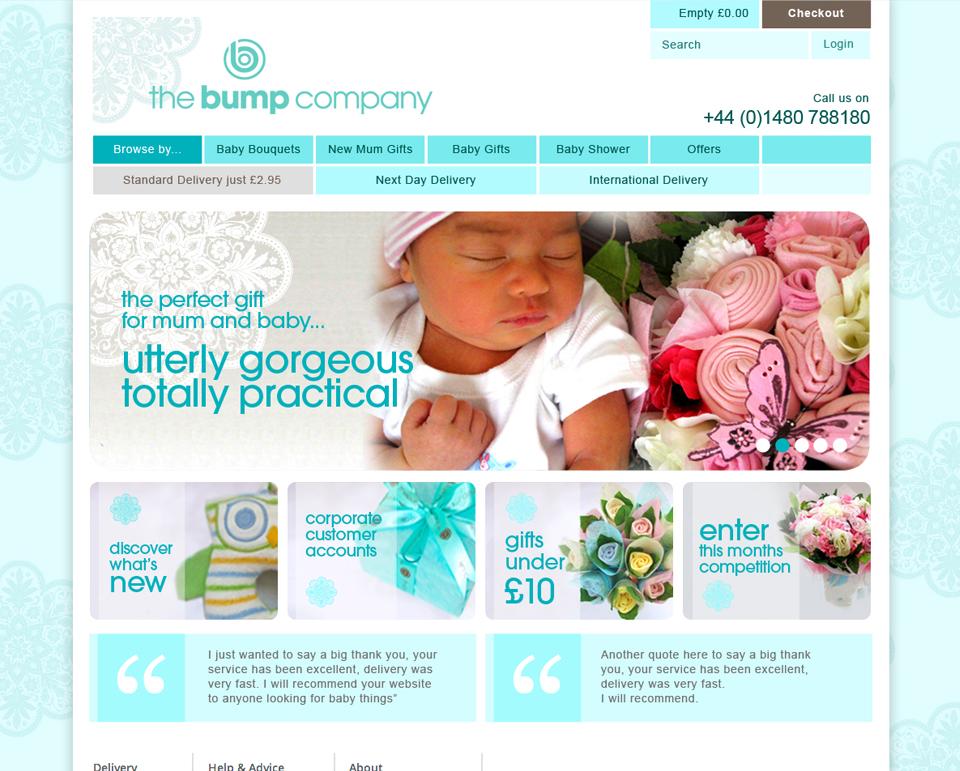
On the latest rendition of the site (first screenshot shown above) a multi-column ‘mega-menu’ is displayed in a totally fluid form on large desktop displays which transforms to a mobile touch orientated ‘off-canvas’ menu on mobile devices (shown below)

That in itself requires a significant additional overhead of design elements and stylesheets that respond to different breakpoints.
Multiply that requirement right across a modern site and your can start to understand the new levels of complexity involved in making a website and all its functions truly responsive to the many different environments it is accessed from.
 Beyond 2020 Visions ...